Google Japan puts 116 keys on conveyor belts because typing was too easy
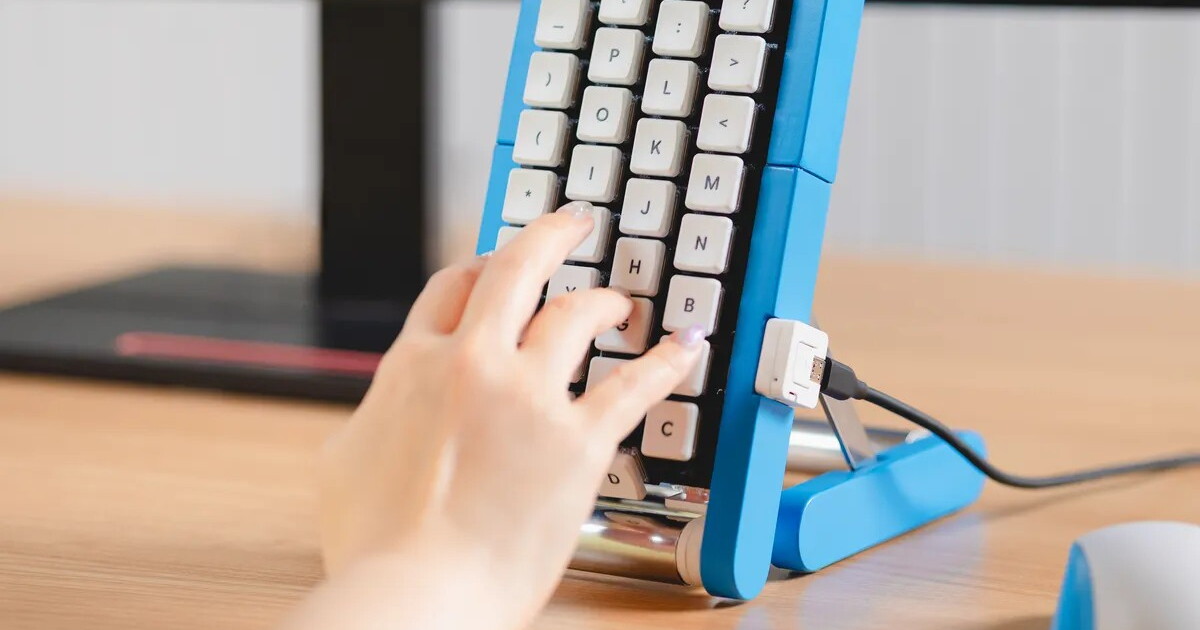
Google Japan seems to have found a solution to a problem none of us knew we had: the fact that keyboards wait for our fingers to reach them. Its latest annual Gboard experiment turns this dynamic on its head with movable keys that eventually sit right under your finger.
The setup is designed (with a completely straight face) as a way to type with one hand or even one finger. The keyboard does the moving, so you don’t have to do it.
It arrived as part of Google Japan’s recurring Keyboard Day tradition on October 1. And no, you won’t be able to buy one (for better or worse!). As one YouTube commenter joked, it looks like an April Fool’s Day video uploaded six months late—a nod to the team’s habit of building fully functional joke hardware.
Gboardくるくるバージョン
The mechanics are as sensible as the premise. Four vertically arranged conveyor belts carry 29 keys each, giving you a total of 116 moving targets. It’s simple: you simply wait for the desired key to arrive under your finger, then tap it at just the right moment, with upper and lower case letters available directly. That leaves your other hand free to drink coffee, operate a mouse, or, if you’re a little more adventurous, perhaps a second conveyor belt keyboard.
Future “improvements” include a high-speed mode for testing hand-eye coordination, a voice guide that announces keys as they pass, longer and shorter versions, and even cardboard keys for typists who like to file their nails. However, typos are pretty unforgiving: misspell something and you’ll have to wait for the Backspace key to appear.
Since Google Japan never half-commits to a concept, the gimmick really works. While there are no plans to release it commercially, the team has released the design as open source on GitHub, so anyone motivated enough can create their own.
Google Japan
The release date itself is central to the joke: October 1 was designated “Keyboard Day” because “10/1” echoes the standard 101-key layout. Every year, the team celebrates the occasion by designing a perfectly functional solution to a problem that never existed.
The conveyor belts are just the last stop in a pretty crazy progression. Last year’s Gboard rotary dial borrowed from old phone hardware, making users physically rotate concentric dials to select letters. In 2024, the double-sided Gboard went in a completely different direction, wrapping 208 keys into 26 linked modules in a Möbius strip-inspired loop that could be attacked from multiple angles (or by multiple people at once).
The older entries only get stranger. There was the head-mounted CAPS version of 2023, the absurdly long Bar version of 2022, and the Teacup keyboard of 2021, plus earlier experiments involving spoon-bending and physical handwriting. Google’s current series dates back to 2012’s single-key Morse code keyboard, with 2026’s conveyor belt contraption officially announced as the 15th installment.
After fifteen attempts, Google Japan still hasn’t perfected the keyboard. However, based on the evidence so far, perfection would probably ruin the fun.
Source: Google Japan






Post Comment