E Ink Kaleido 4 doubles color definition for more satisfying e-reading
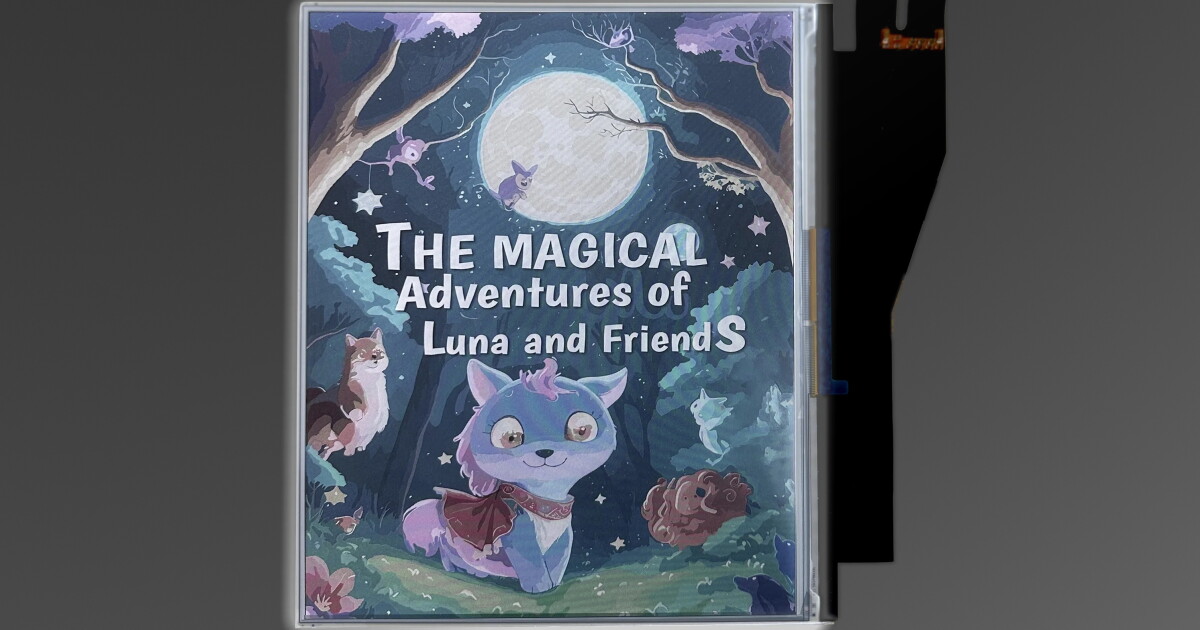
Reading in color on an e-reader can be like reading a faded photocopy of a magazine. It means enduring faded comics, grainy photographs, and text so murky you feel like you’re underwater. E Ink says its new Kaleido 4 is designed to address all of that. But is this the update that finally makes color ePaper look real?
Kaleido 4 is the latest generation of the color ePaper platform used in e-readers and tablets from Kobo, PocketBook and Boox, and Amazon’s Kindle Colorsoft uses a customized version. Compared to its predecessor, the Kaleido 3, E Ink claims the new panels double the color gamut volume (a measure of the range of colors a display can display) to “over 40K,” reflect 15% more white light, offer 50% more contrast, and play video at up to 18 frames per second.
To understand why all those numbers matter, it helps to know how the technology works. Kaleido does not use colored ink at all. Instead, you place a color filter on top of a standard ePaper panel that only mixes black and white pigments; think of a sheet of stained glass placed over a printed page. But it’s not perfect. Kaleido 3 displays black and white text at 300 pixels per inch (ppi), but color at just 150 ppi, with a palette of 4,096 colors. The filter also makes the page look like a poster left in the sun too long, washing it out and reducing contrast compared to monochrome e-readers.
electronic ink
Brighter whites and higher contrast eliminate that cloudiness, and E Ink says the changes also reduce the perception of graininess. A new backplane of oxide thin-film transistors (the layer of small transistors that turns each pixel on and off) supports higher driving voltages and faster refreshes.
Kaleido isn’t E Ink’s only color option. Its Gallery 3 technology uses colored pigments that move to form the image. E Ink lists the platform at 300 dpi, although the reMarkable Paper Pro, which uses it, runs at 229 dpi. The problem is speed. According to E Ink, a black and white update takes 350 milliseconds, but color takes 500 ms in its fast mode and 1,500 ms for the best quality.
So has Kaleido 4 closed the gap? We don’t know yet and the launch leaves two big questions open. E Ink has not released a color resolution or palette size for the Kaleido 4, either in its announcement or on its website. Good e-Reader reports that E Ink’s color now hits 300 dpi, double the Kaleido 3’s 150 dpi, which would be a big jump. And we don’t know if the new technology will have more true colors in its palette, or what exactly E Ink means by its “40K” number.
The first device to use the new displays will be Hanvon Technology’s M10C II, a note-taking tablet aimed at the Chinese market. Combining Hanvon’s own refresh technology with the T2000 time controller developed by E Ink and Himax, E Ink says the tablet turns pages and scrolls 27% faster. A redesigned front light also promises more natural color.
Amazon and Kobo have yet to announce Kaleido 4 devices, although Good e-Reader expects new models from Kobo, Nook, Boox, and Bigme in early 2027. When they arrive, a full spec sheet and some hands-on time will tell us whether the Kaleido 4 looks as good on the electronic page as it does on paper.
Source: E-ink










Post Comment