Apple’s HomeView wants to manage your home, but does it offer anything new?
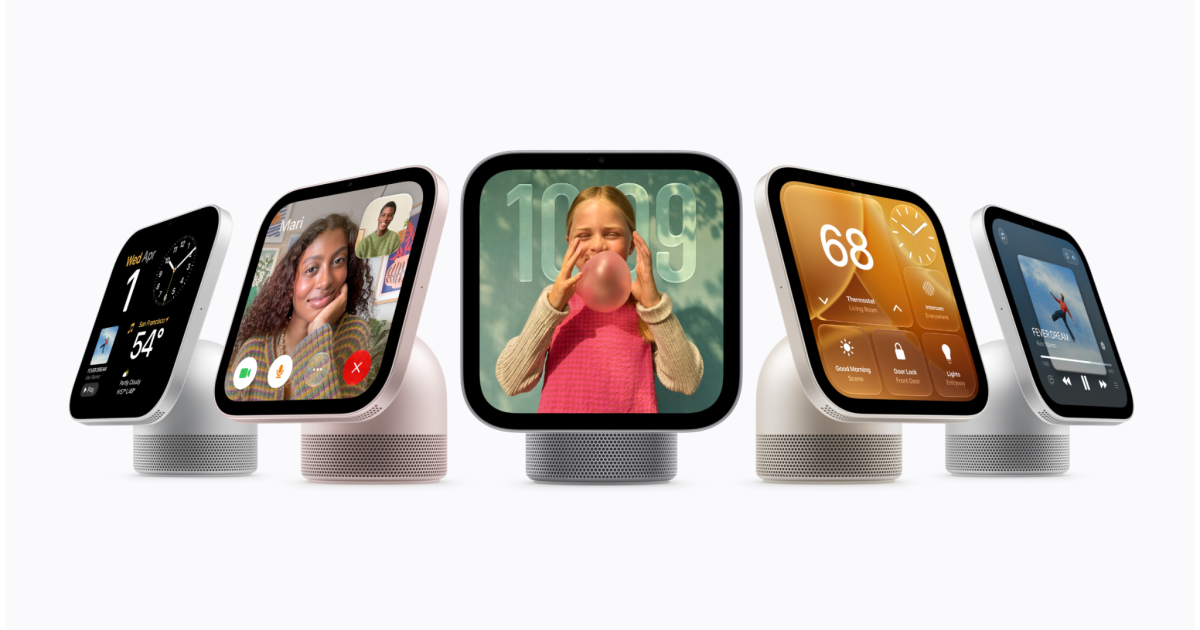
Apple has introduced HomeView, a curious little device that borrows the floating screen of the original iMac G4, the touchscreen of an iPad, the familiar faces of an Apple Watch, and the speaker dock of a HomePod. It’s potentially a great combination: a 7-inch smart display designed to become the center of the connected home.
For $299, HomeView promises music, video, FaceTime, smart home controls, and substantially more capable Siri, all without needing to pick up your phone. It’s an attractive proposition, but Apple is entering a market where much of this already feels familiar. Amazon’s Echo Show has been doing the job of countertop assistant for years.
So what’s really new here?
Four devices, one counter
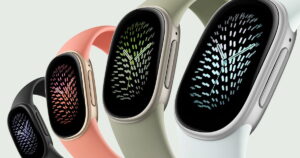
The aluminum table model features a stainless steel tilt hinge and comes in silver, starlight, pink rose, and space gray. Its Liquid Retina display supports True Tone and automatically adjusts its brightness to suit the room, from 500 nits down to 0.3 nits so it won’t blind you on a nightstand.
Apple has paid considerable attention to audio. The tabletop version includes two full-range drivers in the display housing, combined with a downward-facing woofer and two force-cancelling passive radiators in its domed base. Computational audio adjusts sound in real time, while Spatial Audio promises a more immersive listening experience. Small devices have made notable strides in speaker technology, and the original HomePod’s ability to project sound across a room was most impressive. It remains to be seen whether the HomeView can handle something similar with its more compact speaker arrangement.
There’s also the familiar ecosystem: Apple Music, Podcasts, Apple TV, compatible third-party apps, and FaceTime with Center Stage, which keeps callers in frame while they move.
It’s debatable whether a 7-inch screen is really the ideal way to watch TV, but for recipes, video calls, and background entertainment, the format makes sense.
What I find interesting is how HomeView behaves when no one is actively using it. Apple says its interface adapts to viewing distance, showing basic information from across the room and greater detail when someone gets closer. It can recognize up to six household members by their faces and present personalized information for each one.
It’s a nice trick, although Amazon’s Echo Show devices already offer screens that adapt to viewing distance. Apple’s ability to recognize individual members of a household and present their personal information could be its advantage.
The five-minute timer problem
For years, one of the most useful gadgets in my kitchen was an Alexa with a clock. Not because I could read the news or play music, but because I could say “Alexa, set a pasta timer for eight minutes” and look across the room at a large round LED countdown clock.
I’ve since replaced that functionality with my own locally hosted voice assistant, Yaffle, and a couple of Ulanzi pixel clocks. As I described in a previous article, I can now request a timer and have the countdown automatically appear on the corresponding screen.
It required a lot more effort than boiling pasta reasonably would, but it demonstrated an important point. The value of a smart home assistant is not necessarily what it can do, but how naturally it fits into the things we already do.
Apple seems to understand this. HomeView is not intended to replace an iPad or iMac. It’s about making technology useful without constantly demanding our attention.
But for anyone who already has an Alexa-equipped home or is experimenting with Home Assistant, the basic proposition isn’t particularly revolutionary.
Intelligence comes with conditions.
Apple’s real differentiator may be Siri AI, its substantially improved voice assistant. The company promises more natural conversations, broader general knowledge, and some degree of awareness.
And, inevitably, we come to privacy. It’s one thing to know things. Another thing is to know things about you.
For Siri to retrieve personal information from Messages, Calendar, and other apps, HomeView requires a paired Apple Intelligence-enabled iPhone or iPad. General conversational assistance is still available without one, but those personal functions depend on another device.
Apple says sensitive camera and microphone processing is isolated within protected areas of its A18 chip, while personal information is only displayed when the appropriate household member is recognized and their paired device meets Apple’s security requirements.
This is reassuring, but I think it marks another small step in our relationship with home technology. We have become accustomed to devices that are always listening. We are now inviting devices that are also looking, recognizing who is in front of them and adapting accordingly. The convenience is obvious, but so is the question of how much attention we want our homes to pay us.
Certain server-assisted AI features will also have daily usage limits, and expanded paid access is planned for the future.
Another screen or a really smarter home?
Of course, HomeView can control compatible smart home devices, including lights, thermostats, blinds, and locks. It can also display security cameras and, with compatible devices and an iCloud+ subscription, recognize people, pets, and deliveries. Its camera interface can display nine images simultaneously, although fitting that many into seven inches may require good eyesight.
Apple also offers a wall-mounted version, with mounting hardware and power accessories at an additional cost. Deliveries begin November 13.
Of course, the hardware looks attractive and Apple’s approach to customization could make it an attractive addition to households that have already invested in its ecosystem.
The broader challenge isn’t putting another smart display on the kitchen counter. Amazon already does this, while platforms like Home Assistant demonstrate how much can be achieved with relatively inexpensive hardware and a little determination.
And perhaps that’s where Apple’s biggest opportunity lies. I’ve spent countless hours persuading different devices, software, and voice assistants to cooperate, and I’ve even enjoyed some of it. But most people don’t want a hobby to masquerade as an appliance. They just want something that works.
If Apple can pack the flexibility and intelligence of a sophisticated smart home into a device that requires little more than simple setup, HomeView could represent something truly significant. Not because it makes things no one has done before, but because it makes them accessible to people who would never dream of building them themselves.
Can these devices really understand the home they are supposed to serve? Apple wants the entire home to feel effortless. It would be a considerably more impressive achievement than simply giving Siri a new place to live.
Source: apple










Post Comment