Biohybrid harvester generates electricity from human cells
One of the reasons we don’t have powerful cyborgs roaming our streets yet is the batteries needed to power the electromechanical side. They are bulky and prone to running out of juice. Interestingly, the biological side (our bodies) runs 24/7 with inherent chemical, mechanical and electrical energy. Scientists have now developed a way to harness some of the body’s energy to power wearable devices and implants.
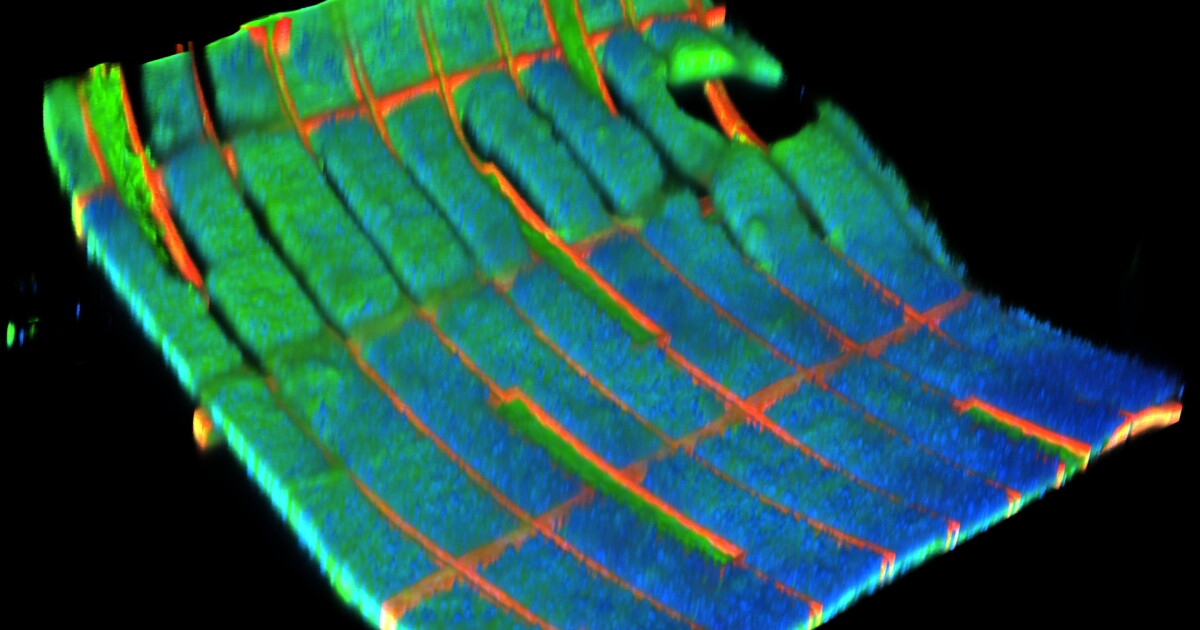
Researchers at the University of Massachusetts Amherst have developed an ultra-thin, flexible electronic mesh that integrates with the living cells of the human heart and converts their mechanical movements into electricity.
The device, called a biohybrid mesh harvester, features numerous small piezoelectric generators distributed across a flexible network that living cells can grow in and around. As cells contract, they deform these generators, producing electricity. In laboratory tests, the researchers say the technology achieved more than 10 times the effective energy density of conventional energy harvesting approaches. The research was published in the journal. Scientific advances.
Electronic implants and wearable devices such as cochlear implants, bionic prostheses, neurostimulators, cardiac implants and diabetes management devices are essential to improve the lives of hundreds of millions of people around the world.
Beyond the necessary healthcare and restorative devices, health tracking has exploded in recent years: Approximately 120 million American adults, about 46% of the adult population, own wearable devices such as smart watches and rings, according to Rock Health’s 2025 Consumer Adoption Survey. Then there is the long-standing fascination with augmenting human capabilities with electronics.
Almost all devices in these fields have an inherent limitation: dependence on batteries. Batteries take up valuable space, add weight and rigidity, and eventually run out. While recharging a smartwatch is a minor inconvenience, replacing the battery in a medical implant may require another surgery, adding medical costs and risks. Smaller or thinner batteries help solve some of these problems, but they also store less energy, potentially limiting the time devices can run.
Scientists have therefore explored alternative ways of powering electronic devices by harvesting energy from the body itself, such as thermoelectric generators that take advantage of temperature differences between the body and its environment, and piezoelectric generators that convert mechanical movements into electricity. Researchers have also recently developed a printable fabric that harvests dielectric charges from its wearer’s movements.
Piezoelectric generators are particularly attractive for implants because the body is in constant motion, from the expansion and contraction of the lungs to the rhythmic beating of the heart. When certain piezoelectric materials are compressed or stretched, they develop an electrical charge that can be collected and used to power electronic devices. They have already been tested in experimental medical implants, including pacemakers powered by the heartbeat of animals.
However, conventional piezoelectric energy harvesters are typically individual devices attached to the surface of living tissue. This centralized approach presents several challenges. On the one hand, their mechanical properties can differ considerably from those of soft and flexible biological tissue, making perfect integration difficult. Their contact with tissue is also largely limited to the surface, restricting the interaction of collecting elements with cellular movements. Increasing the size or number of these devices may introduce additional mechanical and volume restrictions.
To overcome these limitations, UMass Amherst researchers took a different approach, inspired by how living organisms distribute energy production throughout their tissues. They began by making arrays of small ribbons of lead zirconate titanate (PZT), a piezoelectric ceramic commonly used in sensors and actuators. The material produces an electrical charge when subjected to mechanical deformation, making it suitable for harvesting energy from the movements of living cells.
The researchers then embedded these ribbons into an ultra-thin, highly flexible polymer mesh, creating a network of interconnected energy harvesting units. Unlike conventional solid substrates, the open mesh structure provides spaces through which living cells can grow and interact with integrated electronics. To demonstrate this, the researchers seeded the platform with human heart cells, which gradually grew in and around the mesh, integrating the electronic network into the developing tissue.
The resulting biohybrid structure could move and deform with living cells, allowing the electronics to function in close mechanical contact with the biological system. As the cardiac cells contracted, they mechanically deformed the embedded PZT ribbons, generating electrical energy through the piezoelectric effect at multiple locations in the tissue.
Biohybrid mesh harvester
Distributed architecture is the main research innovation. Instead of relying on a relatively large energy harvester attached to one part of the tissue, the mesh integrates numerous miniature generators directly into the tissue structure, enabling energy harvesting through a larger network of cellular interactions while maintaining the flexibility necessary to adapt to biological movements. The researchers also believe that tighter integration could improve biocompatibility by reducing the mechanical mismatch between electronic components and living tissue.
According to the study, the system achieved an effective energy density more than an order of magnitude higher than existing centralized energy harvesting approaches. In other words, the new architecture demonstrated a more than tenfold improvement in the energy harvested relative to the effective volume of the device.
Another potential advantage is scalability. Because the mesh is extremely thin and flexible, the researchers suggest stacking multiple layers to increase the total electricity generated without substantially increasing the volume of the device. Over time, this could allow engineers to tailor energy harvesting capability to the power requirements of different electronic systems.
Ultimately, the technology could find applications in medical implants such as pacemakers, cardiac monitoring systems, neurostimulators, and other low-power biointegrated electronic devices. It could also inspire new approaches to powering wearable sensors and electronic systems designed to operate in close contact with living tissue.
“Our bodies want to reject systems that come with bulk batteries, but when the device exists at the cellular level, you get vastly improved biocompatibility,” says Jun Yao, senior author of the paper and an associate professor at UMass Amherst’s Riccio School of Engineering. “The beauty of this system is how non-invasive and powerful it is.”
However, the technology is still in an early stage. So far, researchers have demonstrated it only in lab-grown heart tissue and have yet to test it in a living organism or demonstrate that it can independently power a functional medical implant. Questions also remain about long-term durability, electrical output and biocompatibility, particularly because PZT contains the number one bioenemy, lead, and would need to be safely isolated from surrounding tissue. That said, the research lays a promising foundation for the integration of electronics with biological tissue.
Source: University of Massachusetts Amherst











Post Comment