Laser technology quickly detects ‘fake alcohol’ without even opening the bottle
Methanol poisoning from contaminated alcohol is relatively rare in countries with strict alcohol regulations, but remains a serious problem in regions where counterfeit alcohol is common. Outbreaks continue to occur each year, causing death, blindness and permanent injury. A few years ago in Laos, six foreign tourists died after drinking at a backpacker hostel, and in 2025 an even larger outbreak occurred in Turkey, claiming the lives of 160 people and leaving more than 250 incapacitated. Both cases were attributed to methanol poisoning from illegally produced alcohol.
The scariest part is how little of this chemical can cause such serious damage. Just 10 ml of methanol (two teaspoons) can cause permanent blindness and kidney failure, while a larger dose can be fatal.
There are three main types of alcohol that we all encounter in everyday life: ethanol, found in alcoholic beverages, isopropyl alcohol, used as a disinfectant and cleaning agent, and methanol, an industrial chemical used in windshield washer fluid, antifreeze, and solvents. Only ethanol is safe to drink, but some counterfeit producers may dilute it with methanol. This happens for several unethical reasons: methanol mimics higher alcohol content, is not taxed like drinking alcohol, and is simply cheaper and can increase profits.
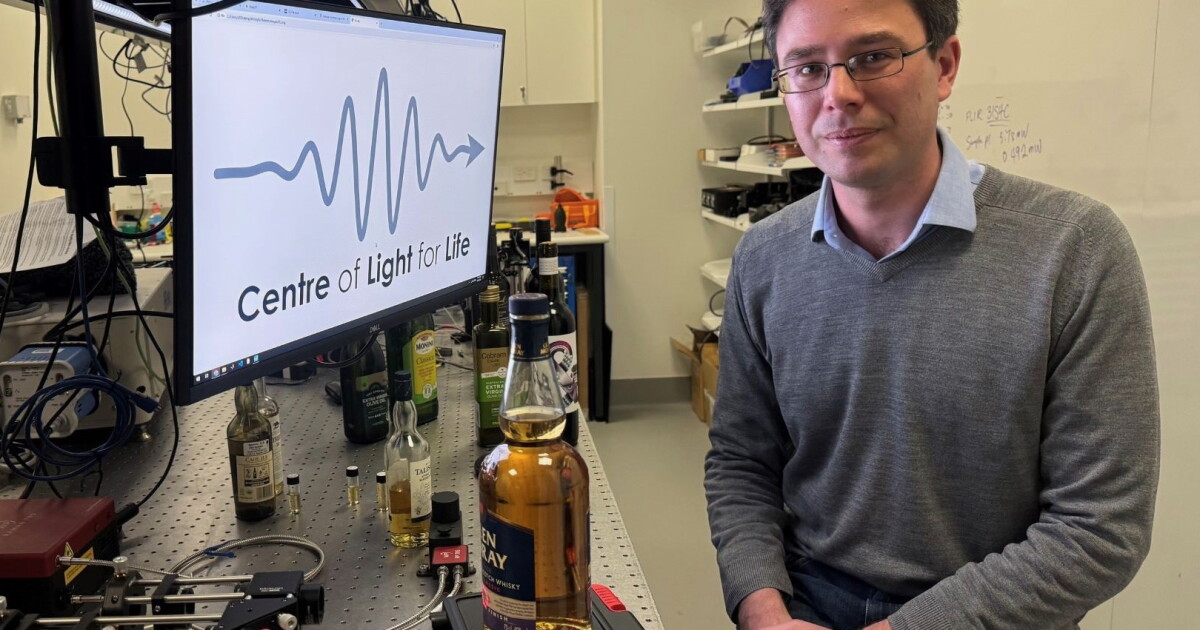
Legitimate alcohol manufacturers use strict quality controls and all of their products undergo extensive testing, which is expensive and time-consuming. Performing such tests without opening the bottle and sending a sample to a laboratory was impossible until a recent discovery by scientists at the University of St. Andrews in Scotland and the University of Adelaide in South Australia.
The researchers used a technology called Raman spectroscopy to read what they call “the unique chemical fingerprint of a liquid.” That’s how it works.
A laser beam is directed at a liquid and scientists analyze how the light scatters when it hits the surface and excites the liquid’s molecules. These different patterns are what tell us the chemical composition of the liquid.
By carefully shaping the laser beam and changing its wavelength, the researchers were able to filter out interference from the bottle itself. That is why this particular testing method does not require opening the bottles, which is the biggest advancement.
The research team was able to detect methanol in whiskey at concentrations approximately 10 times lower than internationally recognized safety standards. In addition to being extremely reliable, this technology is also cheaper and faster than traditional laboratory tests, so it could become a real weapon against fake alcohol around the world.
Large wine producers like Australia could benefit greatly from this technology, as wine fraud costs the global industry billions of dollars each year. But this approach has enormous potential far beyond alcohol production. Researchers hope that in the future it will be used to identify counterfeit perfumes, detect pesticide contamination in olive oil and provide better quality control in agriculture in general.
This new technology is primarily aimed at large organizations such as customs agencies, alcohol producers and distributors, and food safety authorities. While it could reduce the risk of counterfeit alcohol hitting store shelves, consumers are still vulnerable. Avoiding suspiciously cheap alcohol and mislabeled products is still a good defense strategy.
Source: University of Adelaide









Post Comment