DNA computer solves energy problem and crunches numbers in record time
Computing is a resource that consumes a lot of energy in today’s world. By 2050, up to 20% of the electricity consumed by the US commercial sector will be used to crunch numbers. Data centers alone will double their electricity demand in the coming years, making the need for more efficient systems a high priority.
Our own bodies seem like a strange place to look for a solution, but nature has had billions of years to find ways to do a lot with very little. That’s why researchers at Maynooth University in Ireland have turned to the very chemistry of life to develop a new type of computer that works without a constant supply of electricity.
“Silicon-based computers are very energy-intensive: 23% of Ireland’s electricity goes into computing and data storage,” says computer scientist and lead author Damien Woods. “We have been blinded by seeing only one type of computer, but there are other examples around us, including our brain.”
Virtually all computers we use today rely on switches called transistors, which encode data in the form of on and off states. Manipulating these states to perform even the simplest calculations requires a small electrical charge.
However small this current is, it quickly builds up as countless transistors change state billions of times per second.
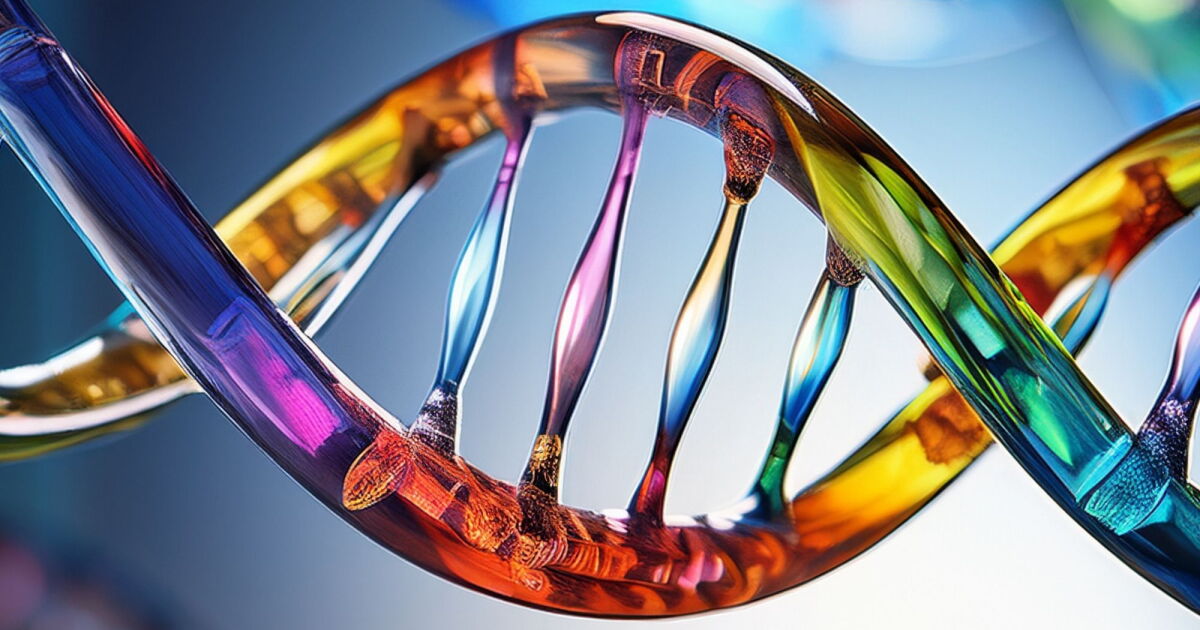
The four chemical units that make up DNA strands also encode information that can serve as the basis for algorithmic calculations. Instead of changes, the act of calculating takes the form of a competition between several sequences.
DNA computing itself is nothing new. In the 1990s, University of Southern California computer scientist Leonard Adleman solved the famous salesman problem using nothing more than nucleotide chains and biochemistry. Since then, researchers have found novel ways to program their chemical recipes to meet a variety of computational needs.
An outstanding challenge is to create a DNA computer that is energetically favorable, stable, reliable and does not require intermediate adjustments or reloads to reach a result.
Woods’ team considered a slightly different approach, one that has more to do with the emerging science of DNA origami than with ancient competition between single strands.
The process combines a nucleic acid “framework” with short segments of DNA in a warm saline solution. As the mixture cools, the lowest energy configuration appears, providing an answer to the problem.
“Molecules interact, they form a structure, and that structure is the answer,” Woods says. “A key innovation is that the system naturally finds that response without the need for continuous energy inputs.”
To test their method, the team ran several different programs, some of which involved calculations up to 100 bits in size.
One of the quickest calculations (add three and 10) took about 30 seconds. He is by no means dazzling, doing math calculations slower than an elementary school student on a hot Friday afternoon.
But that’s not the point either. DNA computing runs in parallel, packing a large number of calculations into a single blob.
“The reaction happens quickly in the test tube, but not as fast as silicon, nor is it intended to be. But compared to other DNA computers, ours is the fastest,” says the study’s joint first author, Abeer Eshra.
Beyond calculations, DNA has a remarkable ability to reliably store enormous amounts of data in a solid bank. In theory, a single gram can contain hundreds of millions of gigabytes, allowing us to fit the growing library of data that accumulates each year in your garage (with room to spare).
Coupled with low-energy methods for storing and retrieving this data and thermodynamically favorable ways of running specialized calculations, the future of computing is starting to look pleasantly cold and wet.
This research was published in Nature.
Source: Maynooth University









Post Comment