Teen founder reveals ‘AI-powered personal computer’ for running local agents – its $3,499 Mac mini rival is powered by an Nvidia RTX Pro 4000 GPU and promises to be a subscription-free ‘brain in a box’
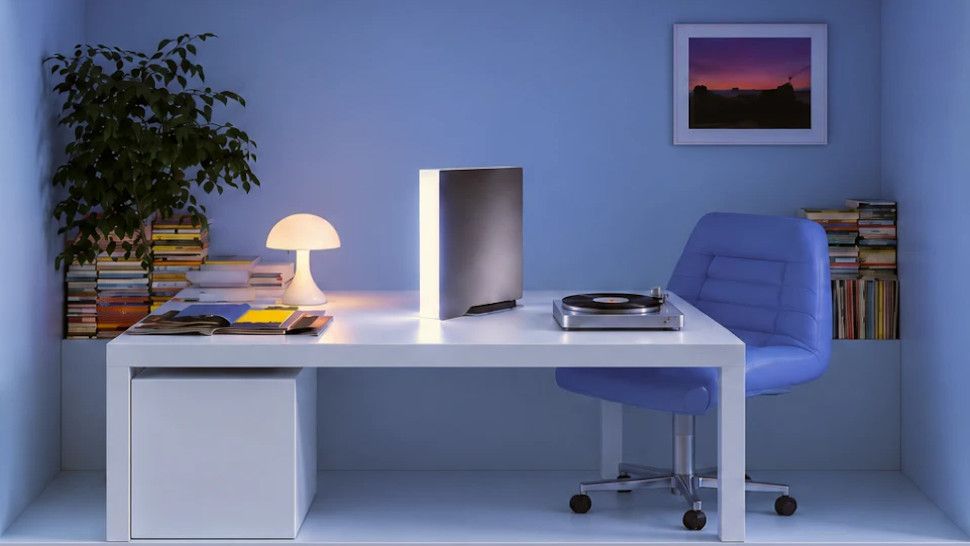
- A new startup has built an AI-powered PC whose first batch sold out
- Ghost’s Core is an ‘AI personal computer that runs models entirely on the device’
- It connects to your apps, services, and devices, so it “creates context in your life over time and continually works to help you.”
Ghost is a startup in the field of AI that wants to capitalize on the desire to have agents running locally instead of using AI in the cloud, and achieve it with a minimum of complications.
TechCrunch reports that Ghost’s first product is a PC for using local AI agents that runs those LLMs (large language models) exclusively on the device, ensuring your data remains private (I’ll return to that point later).
The device is called Core, and Ghost explains on the product site: “Core is an AI-powered personal computer that runs models entirely on the device. It connects to your apps, files, and devices, creates context in your life over time, and continually works to help you, not just when you ask for it.”
Latest videos ofTechnologyRadar
It is, so to speak, a personal AI assistant on your home desktop or, as Zain Javaid, founder and CEO of Ghost, which just raised $11 million in funding, put it, a “brain in a box.”
Core is a PC that is a simple black box built around an Nvidia RTX Pro 4000 (Blackwell) graphics card with 24GB of video RAM, the core muscle for powering the AI, along with 64GB of DDR5 system RAM. The nominal AI performance is 770 TOPS.
The PC comes with three pre-installed AI models: Qwen-3.8-Next, Qwen-3.8-27B, and Gemma-4-31B.
You can use your own model on the device, as you would expect, or any alternative, but the real selling point of Core is that it’s an easy way to get a fully prepared AI box that requires no effort or setup.
This is for AI enthusiasts who don’t want to buy a Mac mini (or Mac Studio) with maximum memory (required for larger AI models) and then have to waste time setting everything up themselves.
Javaid emphasizes that the PC comes with software built specifically to run those AIs pre-installed, avoiding the whole mess of model setup. The CEO observes: “You can run [AI] models on existing hardware, but it’s a terrible experience on many levels.”
Core updates its models automatically as new updates come out (unless you don’t want that to happen), and the idea is for it to be a seamless, “similar to how Tesla works” system with over-the-air updates.
You interact with the PC using an app (on your phone or laptop) with which you can issue voice commands if you wish.
Privacy and security
Besides ease of use, privacy is Core’s other big selling point. You’re tapping into a market where an increasing number of people are realizing the potential of AI to help them in their life or work, who are worried about sending their thoughts or data to the cloud, when they have no real idea of where those queries or uploads will end up.
Core will continually run its AI agents taking on whatever task you need while keeping all your data on the device, and Ghost promises it won’t go anywhere else. Personal data on the PC is encrypted to keep it safe (not even Ghost can access the data) and the device is specifically designed to continue working even if Ghost is turned off (no subscription fee here).
The CEO assures us: “All source code, logic, and model weights reside in the device, not in the services. We built this device so that it does not depend on an external entity to maintain the service.”
Security is further enhanced by a firewall that limits how any agent can use credentials such as passwords, and you can dictate how much autonomy primary agents are allowed, greatly restricting the AI if you prefer.
Javaid tells us that the firewall monitors all outgoing requests and “if it sees the agent performing a sanctioned action or pulling data that it shouldn’t, it rejects the request and flags it for the user to review.”
Core is priced at $3,499 in the US (around £2,600 / AU$5,000) and pre-orders for the first batch of PCs sold out on the first day they were offered (yesterday). Those devices will ship later this month and you can now register your interest in a second batch of PCs coming off the production line.
Analysis: a question of value
Core can be linked to all aspects of your life, or that is certainly the idea, and part of the reason why there is so much emphasis on privacy. It needs to be airtight for security purposes, as Core connects to your existing devices and services, smart home devices, sports watches (or personal health data) and learns over time how you live your life, imparting advice based on that knowledge.
Exactly how useful the system will be remains to be seen, and may also depend on how “smart” it has become in terms of its variety of devices and technology. Of course, there could be a lot of scope beyond life monitoring for Core’s AI agents, and presumably there will be flexibility to get them to do what you want.
The other possible sticking point is the price. Is $3,499 a lot to pay for a dedicated AI PC? Well, it’s certainly a considerable sum of money, but there are some heavy components under the hood here (and the RAM crisis is still in full force). In fact, the current Nvidia GPU price actually makes the PC a bargain as is (the company bought out its stock of those graphics cards when they were much cheaper, so the next batch will be more expensive).
If you set up a Mac mini as a top-of-the-line device for AI, you’re looking at $3,199 in the US at the time of writing, and it doesn’t come with the aforementioned strengths of software designed specifically to run local AI easily, nor the privacy and security elements mentioned.
I have a feeling Ghost might be on to something here, at least in terms of pushing the concept of a simple, easy-to-use AI box that does everything locally. I doubt this will be the last version of this type of idea, and the price involved may become a little more realistic in the future. Although that depends on how the AMR crisis develops and unfortunately the latest signs are far from positive.
Follow TechRadar on Google News and add us as a preferred source to receive news, reviews and opinions from our experts in your feeds.
The best laptops for all budgets












Post Comment