Portable Xtomo-Cube is the world’s smallest CT scanner
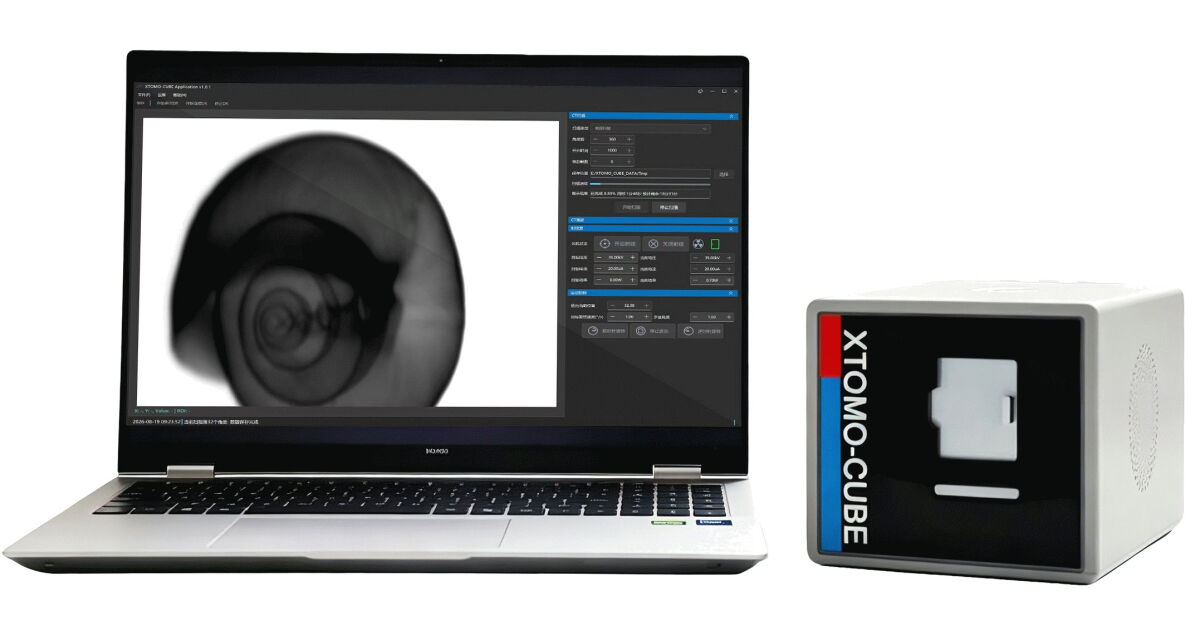
Picture a CT scanner and you probably picture a doughnut-shaped machine, the size of a small car, measuring about 6.6 feet (2 m) tall and weighing several tons. Chinese researchers just built one small enough to hold in one hand.
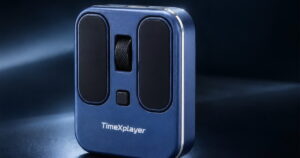
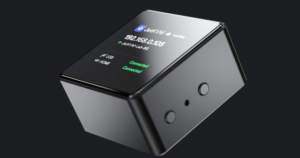
The new device, called Xtomo-Cube, measures just 5.5 x 5.1 x 8.7 inches (14 x 13 x 22 cm), about the size of a desktop speaker, and weighs about 13 pounds (6 kg). Its creator, RuiyingDetection Technology, a spin-off company from the Institute of High Energy Physics of the Chinese Academy of Sciences, calls it the smallest and lightest CT system ever built.
Until now, the record for the smallest portable CT scanner belonged to a unit developed by the Fraunhofer Development Center for X-ray Technology (EZRT) in Germany, which weighed 19 kg (42 lb), more than three times as much as the Xtomo-Cube.
“This is the smallest CT scanner in the world,” said Liu Baodong, an engineer at the Chinese Academy of Sciences and CEO of Ruiying. “The device can be held in one hand and is the smallest and lightest CT system in the world, which is why people call it handheld CT.”
CT scanners come in all kinds of shapes and sizes. Some industrial systems are truck-sized and up to three times heavier than a standard hospital scanner, while others are compact enough to be quickly carried into an operating room or small enough to be placed on a countertop (like a microwave) to scan small samples.
“There are probably more types of CT scanners than there are cars: sports cars, trucks, anything you can imagine,” Baodong said. Science and technology journalIn comments later cited by South China Morning Post. “This is the compact car of the CT world.”
Chinese Academy of Sciences via SCMP
CT, or computed tomography, works by combining X-ray images taken from multiple angles into a computer-reconstructed 3D model of the interior of an object. The technique dates back to the 1970s, when British engineer Godfrey Hounsfield built the first clinical scanner in London, which was later used to detect a brain tumor.
The real engineering challenge has been squeezing that same imaging principle—the
The Xtomo-Cube is not intended to replace a hospital or industrial scanner. Its scanning field is only 16 mm (0.63 inches) in diameter, meaning it can only view small objects, not human bodies. What makes it useful is precisely what makes it small: an x-ray source that operates at just 50 kVp (kilovolts peak, a measure of x-ray energy), well below what a medical scanner uses. That lower power also means that the machine needs much less protection from the radiation around it.
The detector, essentially the device’s retina, uses pixels just 18.5 micrometers (0.0007 inches) wide; the smaller the pixel, the finer the image grid. The scanner’s spatial resolution, that is, the smallest detail it can make out in a reconstructed image, is 80 micrometers (0.003 inches), about the thickness of a human hair.
With around 200 watts of power consumption, the Xtomo-Cube can run off a portable battery to charge a phone, which the company says makes it practical for field work. Ruiying also proposes it for university teaching, as the lower voltage reduces the risk of radiation and, unlike many closed commercial systems, its scanning parameters are adjustable and give users access to raw data to experiment with image reconstruction algorithms.
Ruiying has not revealed the price or release date of the Xtomo-Cube. But if it delivers on its promise, this pocket scanner could save archaeologists and geologists the headache of packing up fragile finds, shipping them to a lab, and waiting weeks for results. Instead, they could look inside ancient seeds, small amulets or sediment cores at the site in a matter of minutes, and decide in real time whether it’s worth continuing the excavation.
Source: CAS via SCMP









Post Comment