AI Shopping Carts Increase Consumer Spending, Study Finds
One of the many promises of AI is that it will help us do everything better. Work faster, research more fluently, and perhaps be more financially prudent? Well, not exactly. Research suggests that AI-assisted shopping may end up making you spend more.
According to a new study from Bayes Business School at City St. George’s, University of London, shoppers who used AI-powered shopping carts spent 32% more at the supermarket than those who stuck with a regular cart. Technology also caused people to buy more items and stay in the aisles longer.
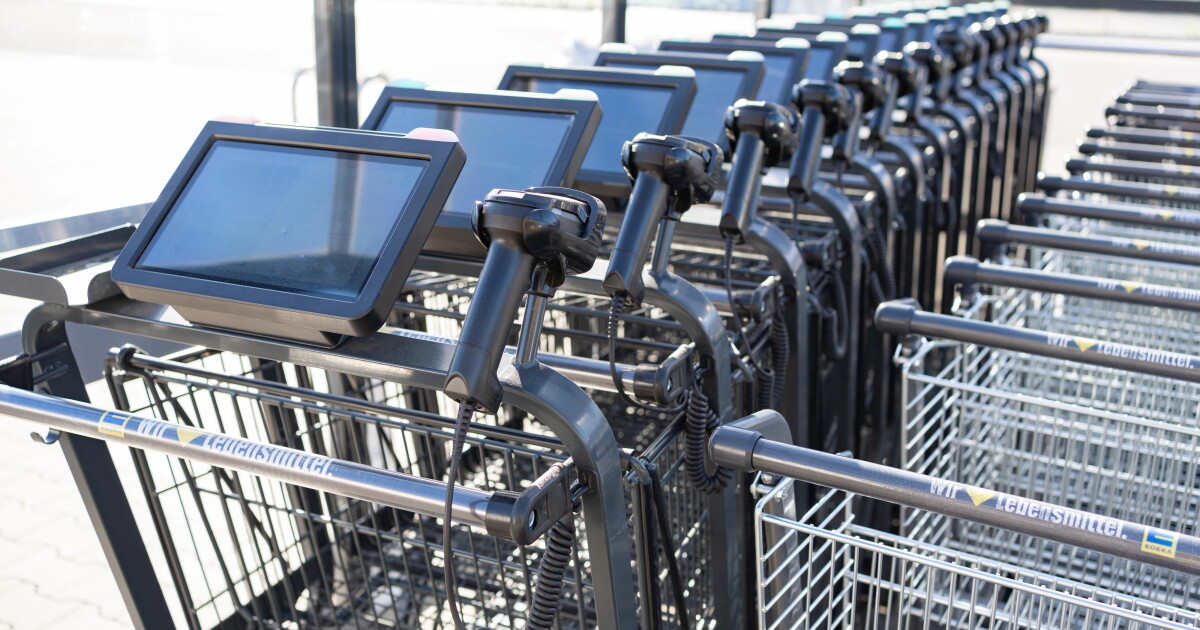
The researchers set out to measure the impact of a digitized shopping experience on consumer behavior and, by extension, retailers’ profits. The tool of choice was a “smart car,” a regular car equipped with a tablet on the handlebars. These screens allow shoppers to digitize their shopping lists, receive personalized product recommendations, navigate the store, and pay without having to wait in line at the checkout. In theory, a friendlier and frictionless trip. In practice, this is arguably a fairly effective upselling machine.
Over a one-month period in March 2025, researchers observed 12,418 unique shopping sessions at a well-known German supermarket chain, of which 9,422 involved a “smart shopper” using one of the AI carts.
For each session, they recorded the value of the basket, the number of items purchased, and the total time spent in the store, then timestamped each trip and tied it to the day of the week and the time of day the cart was first turned on. They divided the days into morning, afternoon and night, and separated weekdays from weekends. The team even tracked what shoppers used the screens for, whether it was lists, recommendations, browsing, or just viewing interesting ads.
According to the data collected, smart cart users spent 32% more on average than non-users. They also purchased 25% more items (12.02 vs. 9.61) and spent 23% more in the store (40.40 minutes vs. 32.75). Spending spikes were most pronounced in the evenings and weekends, while the longest, quietest trips occurred at night. As an additional finding, warmer weather seemed to send everyone home sooner, reducing trip lengths across the board.
Lead author Dr Sabrina Gottschalk, professor of marketing at Bayes Business School, described this as a real revenue opportunity for stores. Beyond directing customers to deals and new products, he noted that digitalization increases engagement and gives retailers a new advertising platform right on the handlebars.
“Retailers are increasingly using technology to improve consumers’ shopping experience, and our findings suggest they can realize significant revenue gains by doing so effectively. In addition to guiding customers to special offers and new products, digitalization induces greater engagement and additional advertising platforms,” he said.
However, there was a twist. When the researchers approached his most For avid users, the “super users” who racked up 20+ screen interactions in a single trip, things no longer seemed perfectly aligned. These shoppers bought many more items and stayed even longer, but overall they didn’t spend more money. After a certain peak of interaction, both spending and basket size began to fall.
Now, on the surface, this seems like a contradiction. How do you buy more but spend the same, or do you touch the screen more and end up buying less? This is common in observational studies like this one, which generally cannot clearly separate causation from correlation due to some incommensurable variable. Smart cart users may spend more thanks to the cart. However, it could also be that the type of person looking for a smart cart always filled a larger basket.
Then there’s the reading that gives the AI some points. If super users bought more items on average but didn’t spend more than lighter users, perhaps they were making smarter decisions, spotting deals, comparing prices, and letting the AI tell them a better value. On the other hand, it could also mean that once shopping becomes a game of tapping the screen, people gravitate toward seeking entertainment rather than shopping heavily.
That said, researchers see the average 32% increase in spending as a clear result and opportunity for retailers, whether the additional spending was driven by a sneaky nudge or by artificial intelligence helping consumers shop smarter. After all, spending more doesn’t necessarily mean making bad decisions. It could be a situation where you save more in the long run, or just remembering to get everything you really need in one trip. Either way, cha-ching for retailers! Researchers even suggest “luring” customers to use the technology.
“Our research shows clear increases in spending and consumption among those who choose to use digital assistance in-store, suggesting that retailers should offer this technology and entice customers to use it, perhaps with the promise of loyalty points or rewards,” said Dr. Yusuf Oc, co-author of the study published in Business Research Magazine.
So should you prepare yourself the next time a cart of tablets arrives? Not necessarily.
The carts are really convenient and no one directly forces anything into your basket. However, it’s worth remembering that every recommendation and happy message on the screen is designed with the retailer’s bottom line in mind, not yours. As Gottschalk advises, the smart thing to do is enjoy the convenience while also being aware of how those digital nudges shape what ends up in your cart. Bring a list, know what you came for, and maybe let the AI do the navigation while you keep a firm grip on your wallet.
Source: City St. George’s, University of London










Post Comment