Discarded lobster shells find their way onto greens as biodegradable golf tees
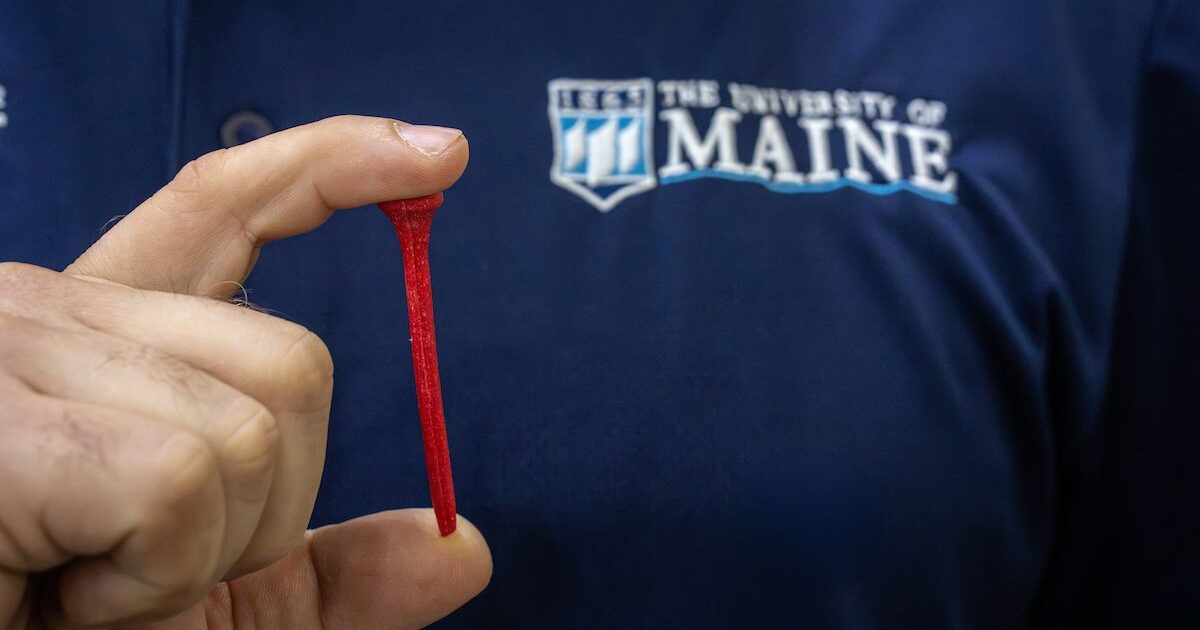
The state of Maine’s fishing industry generates approximately 50,000 tons (45,359 tons) of lobster shells each year, most of which end up in landfills. Researchers at the University of Maine believed there had to be a better use for this waste. They spent more than a decade exploring new ways to give those shells a second life and came up with…golf tees.
The idea of recycling lobster, crab or shrimp shells is not exactly new. One of its main components is chitin, which can be transformed into a biopolymer called chitosan. Chitosan has found applications as wound dressings, self-healing paints, and anti-decay coatings for fruits and vegetables.
But why golf teesof all things?
These small objects contribute more to global waste than you imagine. They are usually made of wood or plastic and neither material is ideal. Wooden tees do not last long on the golf course and can take years to decompose. For those who prefer numbers, more than one billion wooden tees are thrown away each year in the United States alone.
Plastic t-shirts are more durable, but they also break over time. Because of how small they are, many are never collected. Instead, lawnmowers shred them, leaving plastic fragments on the ground for a long time. Some golf courses have even banned plastic tees entirely due to their environmental impact. All in all, there is definitely room for a better alternative.
University of Maine
The challenge of making golf tees from lobster shells came down to two main things: they had to be durable but also able to decompose quickly without harming the environment. According to the researchers, the lobster shell tees they developed are as strong as those made from eastern white pine and can decompose in just 30 days.
The process begins by drying the shells and breaking them into smaller pieces. These pieces are then ground into powder and mixed with other natural materials, including food coloring, to produce tees of different colors, creating a solid composite that can be molded into the desired shape: a golf tee. For now, the researchers do not reveal the exact formulation.
Molding the material was another challenge. Because lobster shell composite behaves differently than plastic when heated and shaped, it turned out to be incompatible with traditional equipment. To overcome this challenge, the researchers had to develop a specialized injection molding system.
University of Maine
The new method has shown quite promising results in laboratory tests. The research team was able to accelerate production of the compound from 0.45 kg (1 lb) to 22.7 kg (50 lb) per hour. This is a significant improvement, but still relatively low numbers by industry standards.
For now, the estimated cost of a single tee ranges between 5 and 30 cents. Researchers hope to further expand manufacturing, which will reduce cost and allow lobster shell T-shirts to compete with conventional options on the market. They could then even be used with biodegradable lobster shell-shaped golf balls, which were previously developed at the University of Maine.
“What we’re doing in this project is using an underused waste material from the fishing industry, from the lobster industry,” says lead scientist David Neivandt. “We are trying to create value-added products that can generate income for lobstermen as well as processing facilities.”
Source: University of Maine














Post Comment